

Pushing Back When UX Isn’t the Organization’s Top Priority
In today’s competitive landscape, delivering exceptional User Experience (UX) is no longer just about creating visually appealing interfaces—it’s about ensuring that every design decision contributes to the organization’s overarching goals. Aligning UX with business objectives requires a strategic approach that balances user needs with measurable outcomes like revenue growth, customer retention, or brand loyalty. This alignment not only enhances user satisfaction but also drives sustainable business success by fostering products that are intuitive, efficient, and impactful. By embedding UX principles into the core of business strategy, organizations can create seamless experiences that resonate with users while achieving key performance indicators (KPIs). Here’s how to effectively bridge the gap between UX and business goals:
The Cost of Deprioritizing Good UX
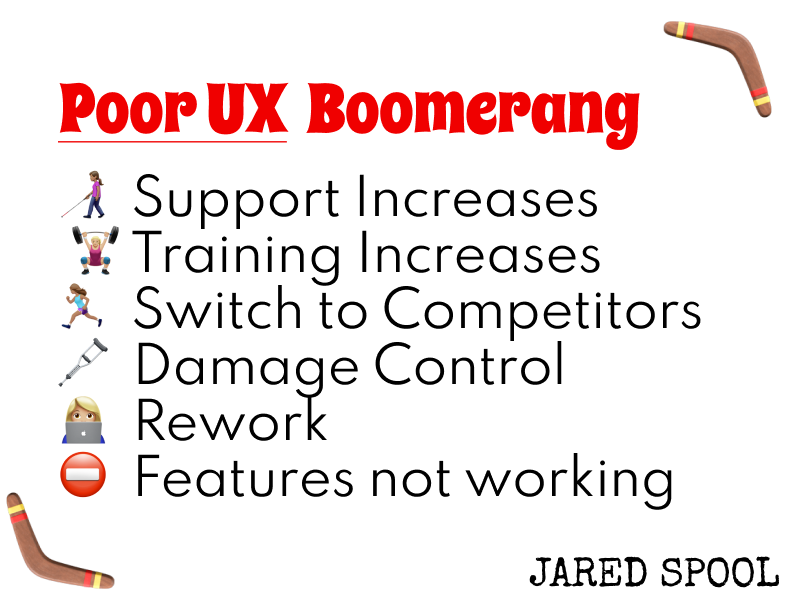
Every product or service has a user experience, whether intentional or not. The question is where it falls on the spectrum from frustrationto delight. Neglecting UX doesn’t eliminate the experience; it just risks delivering a poor one. Research consistently shows how poor UX impacts organizations:
Increased support costs: Frustrated users flood support channels.
Training burdens: Complex interfaces require more user training.
Customer churn: Poor experiences drive customers to competitors.
Stakeholder damage control: Leaders scramble to addr
Wasted development: Features go unused or need reworking.
These outcomes are evidence that deprioritizing UX is,in effect, prioritizing poor UX. Tracking these consequences—support tickets, customer complaints, or unused features—builds a compelling case for investing in good UX to avoid these costs.
Getting Ahead of the Problem
Releasing new features or products is inherently risky. Stakeholders are betting on benefits but face the possibility of failure if the release delivers a subpar experience. UX leaders can shift the conversation by focusing on risk mitigation:
Conduct UX research early: Before development begins, research identifies potential risks and defines what’s needed for a successful release. This sets a clear “definition of done” for developers.
Highlight win and lose conditions: Map out how a release could delight users (win) or frustrate them (lose). Research pinpoints the tipping point between the two.
Minimize wasted effort: By identifying the minimum work needed for a positive UX, research ensures development focuses on what matters most.
This proactive approach shows stakeholders that UX isn’t an extra step—it’s a way to de-risk their bets and maximize the chances of a successful release.
Reframing UX as a Partner to Other Priorities
The perception that UX competes with other priorities is a core problem. In reality, UX underpins the success of all other work. A product’s success hinges on the experience it delivers, and neglecting UX allows complexity to creep in, making it harder to onboard users or deliver value. Over time, this erodes the product’s effectiveness.
To change this perception:
-
Stop positioning UX as a trade-off: Instead of advocating for UX over other work, show how it supports those efforts. For example, good UX reduces the risk of new features failing or technical improvements going unnoticed.
-
Demonstrate measurable impact: Use data from research or user feedback to show how UX investments prevent costly rework, improve adoption, and retain customers.
-
Align with stakeholder goals: Frame UX as a tool to achieve what stakeholders care about—whether it’s revenue, efficiency, or customer satisfaction.
By integrating UX into the broader strategy, it becomes a partner to other priorities, not a competitor. When stakeholders see UX as a way to ensure their bets pay off, it’s no longer something to deprioritize—it’s a critical part of winning.
Based on learnings from Jared Spool’s: Pushing Back When UX Isn’t the Organization’s Top Priority