Maslow’s Hierarchy of Needs: A Timeless Framework for Understanding Human Motivation
Published by abyss.singh on

Maslow’s Hierarchy of Needs: A Timeless Framework for Understanding Human Motivation
Even in 2025, when we talk about user experience, employee engagement, product adoption, or personal growth, one model from 1943 still shows up everywhere: Abraham Maslow’s Hierarchy of Needs. It remains powerful because it reminds us that humans are not just “users”, “customers”, or “employees”; we are people with layered motivations, and until the lower layers are satisfied, the higher ones barely register.
What Exactly Is Maslow’s Hierarchy?
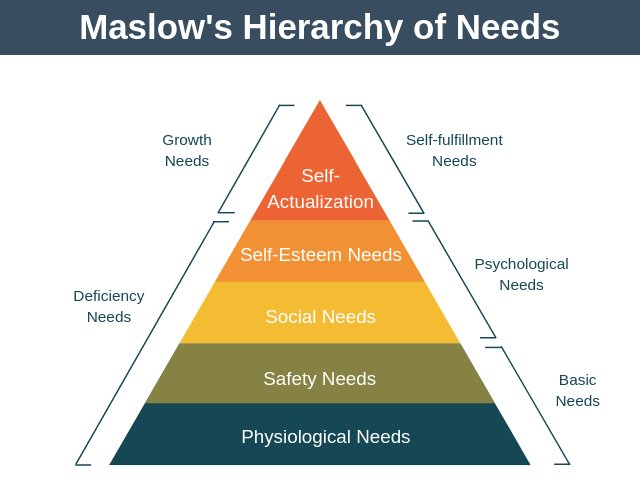
Maslow proposed that human needs arrange themselves in a pyramid of five (later expanded to eight) levels. We are motivated by the lowest level that remains largely unfulfilled.
- Physiological Needs (Base of the pyramid) Air, water, food, shelter, sleep, clothing, health. If these are threatened, nothing else matters.
Safety Needs
Personal security, employment, health, property, financial stability, safety from violence.Love and Belongingness Needs
Friendship, intimacy, family, sense of connection, community, belonging to groups.Esteem Needs
Respect, status, recognition, strength, freedom, achievement, confidence. Maslow split this into lower (respect from others) and higher (self-respect).Self-Actualization Needs (Top of the original pyramid)
Becoming the most that one can be, pursuing personal growth, peak experiences, living in alignment with your potential.
Later in his life, Maslow added three more levels above self-actualization:
- Cognitive Needs – knowledge, understanding, curiosity.
- Aesthetic Needs – beauty, balance, form
- Transcendence Needs – helping others achieve self-actualization, spirituality, service beyond the self
The Five Tiers of Digital Needs
- Physiological Needs → Basic Functionality and Performance:
- The need: The product must work. Pages must load quickly, links should be clickable, and core features (like searching for a product or sending a message) must be reliable. If the app crashes constantly or is confusing to navigate, users cannot progress to higher needs.
- In UX: This is about intuitive design, minimal load times, and ensuring accessibility. A website that is slow or broken is essentially an unmet physiological need for the user.
- Safety Needs → Security, Trust, and Reliability:
- The need: Users need to feel safe and secure while using your product. This applies to their data, privacy, and the predictability of the interface.
- In UX: Strong security measures (like secure authentication), clear privacy policies, and consistent UI patterns build trust. The user should never feel unsure of what will happen when they click a button or enter personal information.
- Love and Belonging Needs → Community and Connection:
- The need: Once basic trust is established, users look for a sense of connection. Does the product help them connect with others?
- In UX: Features like social media integration, comment sections, user forums, or personalized greeting messages (“Hello, John”) foster a sense of community and personal connection.
- Esteem Needs → Status, Achievement, and Recognition:
- The need: Users want to feel competent, valued, and recognized for their efforts.
- In UX: This is where gamification shines. Badges, points, leaderboards, “pro” status, or LinkedIn skills endorsements all tap into the need for accomplishment and status. A simple “Order successful!” message makes a user feel competent and in control of their actions.
- Self-Actualization Needs → Personal Growth and Fulfillment:
- The need: The user achieves their ultimate goal or a profound personal improvement through your product. They use the tool to become a “better” version of themselves.
- In UX: This is about helping users achieve meaningful life goals. A language learning app helps a user master a new skill; a project management tool helps someone organize their life and reach career goals. The product becomes a facilitator of personal actualization.
Applying the Hierarchy in Your Design Process
- Prioritize the Foundation: Don’t spend months developing a sophisticated gamification system (Esteem needs) if your core login feature is buggy or your app crashes frequently (Physiological/Safety needs). The lower tiers must be stable first.
- Design for Trust: Make security prominent. Clear security badges and consistent branding build the trust necessary for users to feel safe exploring advanced features.
- Facilitate Connection Intentionally: Use social features only when they genuinely add value to the core experience.
- Empower Users: Design interfaces that make users feel capable and in control. Clear feedback loops and progress indicators go a long way.